Bristol Bay · Southwest Alaska · Float Fishing · Since 1993
Multi-day guided float trips for fly fishing rainbow trout, Dolly Varden & salmon — floatplane access only, Southwest Alaska.
We run a limited number of float trips each season to keep the experience personal.
No roads. No lodge. No crowd. Just wild water, wild fish, and the kind of silence that takes a few days to settle into.
Enter the Season
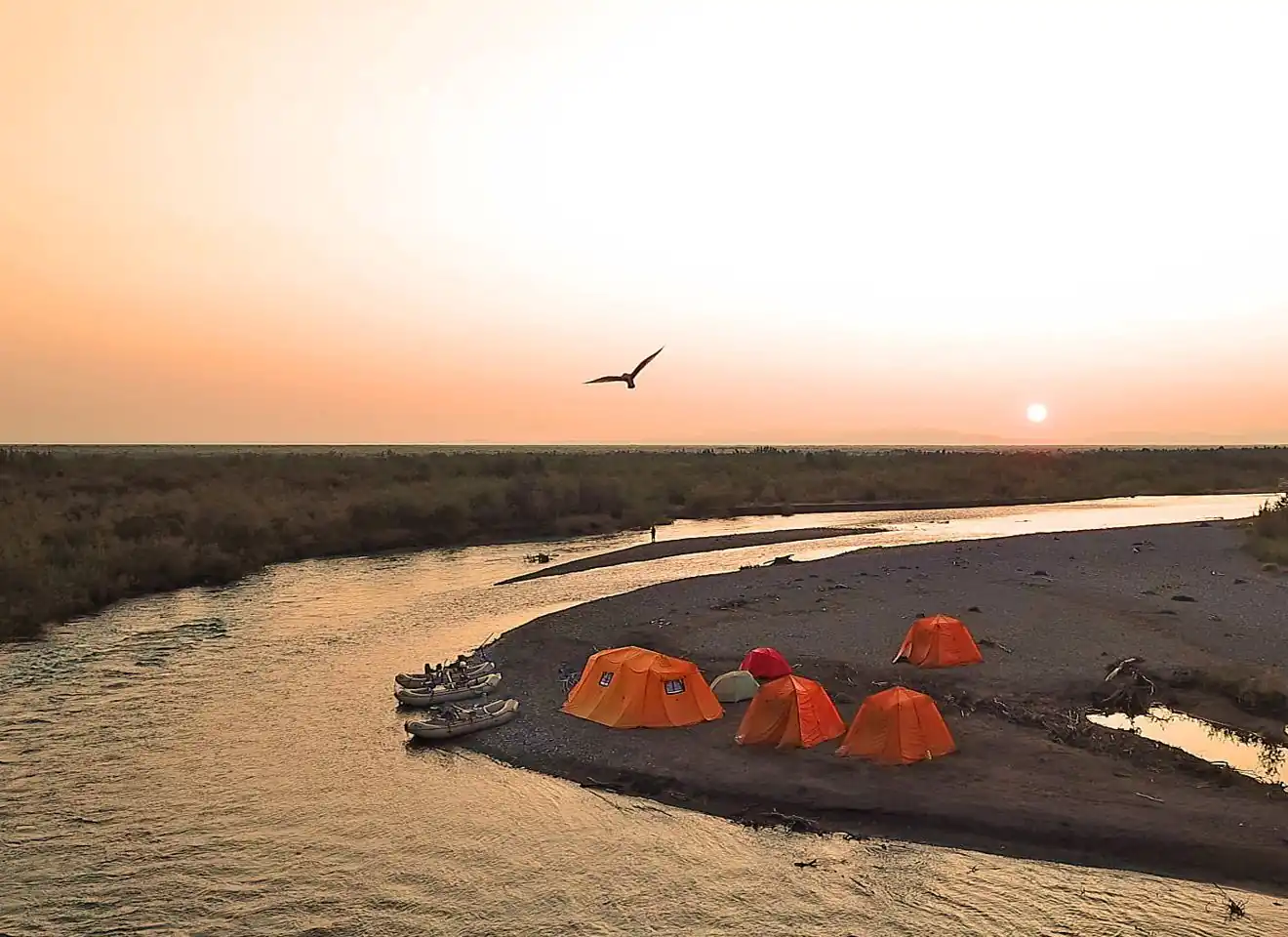
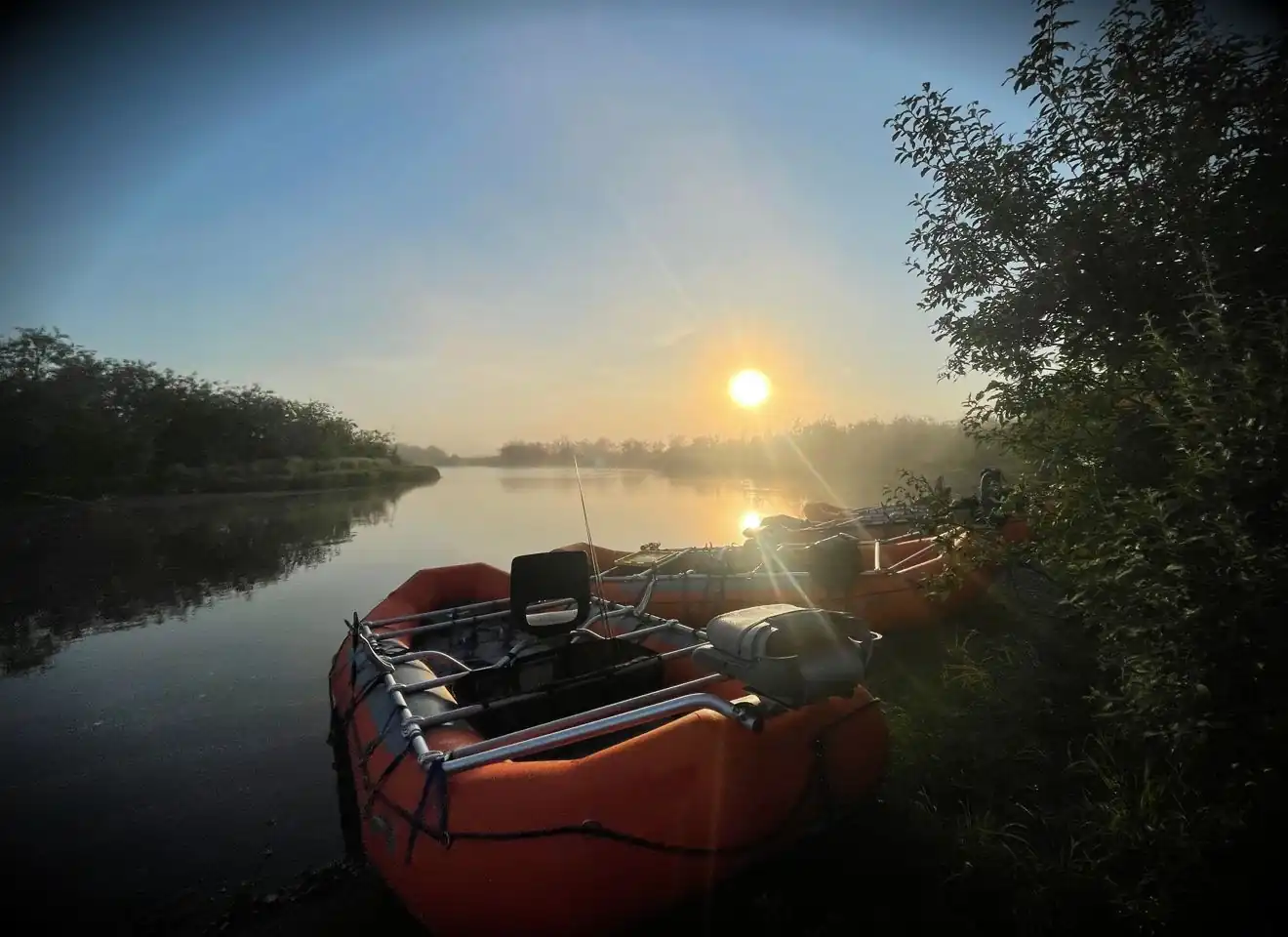
On the third morning of a float last August, just as the fog was lifting off the braids, one of my guests stopped mid-cast. He wasn't looking at the water. He was looking upriver, toward a valley empty and silent for a thousand years. He said, quietly, almost to himself: “I get it now.”
That's the moment it usually happens. Somewhere between the first camp coffee and the first untouched side channel, people realize a true wilderness float trip isn't the alternative to a lodge. In many ways, it's the upgrade. You're not observing Alaska — you're inside it.
I've spent more than three decades on these rivers. The Kanektok, the Goodnews, the Arolik, the Togiak — each one a different character, a different rhythm. What follows is what a season out here actually looks like, from first light to last, from June to September.
— Paul Hansen, Alaska Rainbow Adventures
The river sets the rhythm. This is what a week looks like when you stop fighting that.
You don't need an alarm. By the time the Alaskan morning light starts filtering gold through the tent walls, your brain is already online. You're thinking about the run you passed yesterday. The seam behind that gravel bar where the big char were stacking. Whether the wind is going to cooperate.
Breakfast is real food — eggs, bacon, pancakes, camp coffee. You're going to be on your feet, wading gravel bars all day. You need fuel. By the time the rafts are loaded and the rods are rigged, the river is already telling you things.
"In Southwest Alaska, the weather is always the first conversation of the day. Not in a nervous way — more the way a farmer checks the fields. You want to know what you're working with."
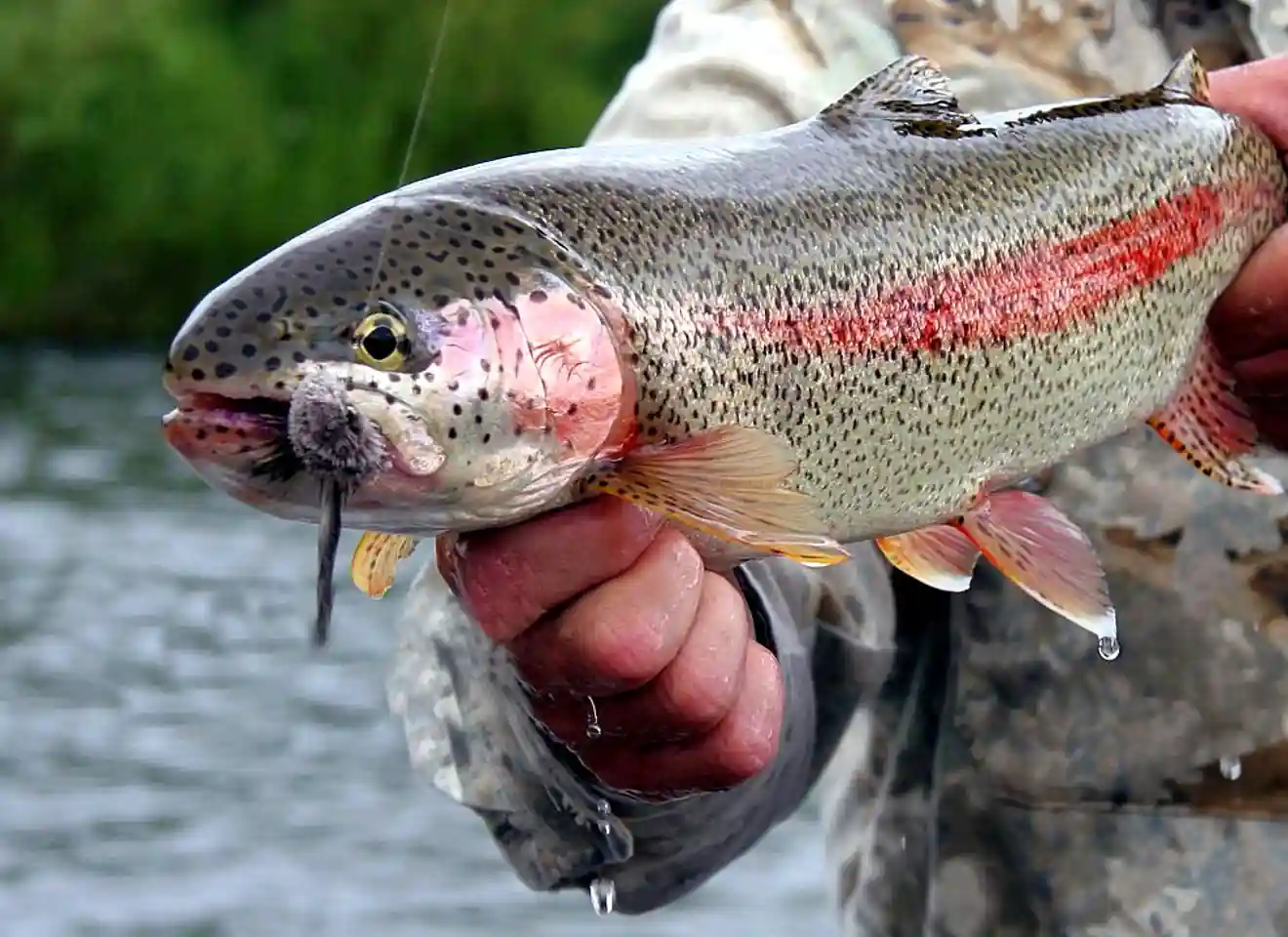
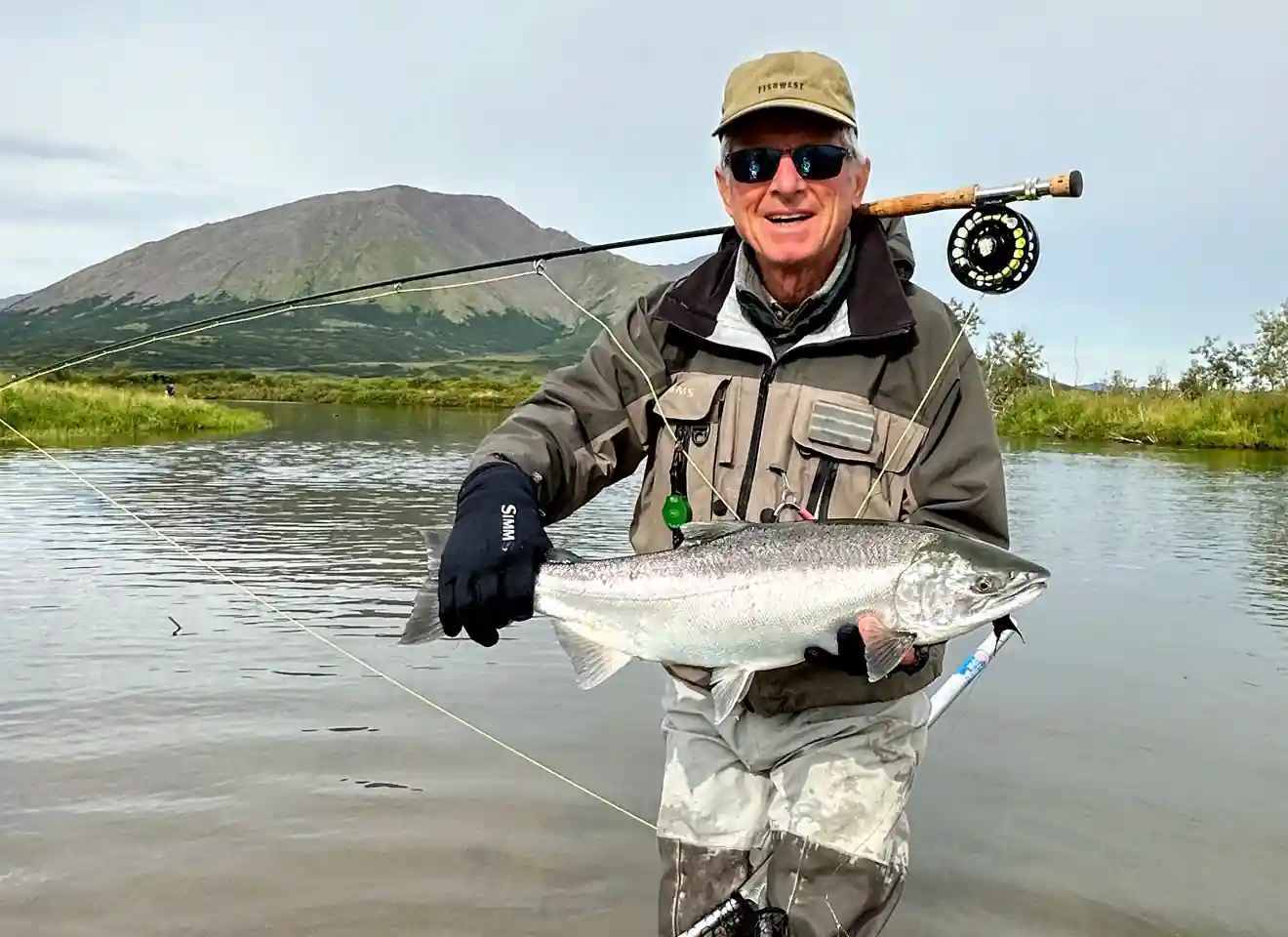
The first few hours are often the best. Low, angled light. Fish that haven't seen a fly yet today. Rainbows and Dolly Varden holding in the tailouts, the edges of current seams, the soft water behind boulders — wild ones, fish that have never seen a hatchery truck.
July on the Kanektok means mouse fishing. There is nothing in freshwater fishing quite like watching a 24-inch leopard rainbow come up and eat a foam mouse pattern off the surface. When it happens, you don't forget it.
"Just don't strike too soon."
"A good guide doesn't fish every riffle. He fishes the right ones."Paul Hansen · Alaska Rainbow Adventures
Around noon, the raft slides onto a gravel bar. Here's the thing about eating lunch in the middle of a Southwest Alaska wilderness river corridor: it's absurd in the best possible way.
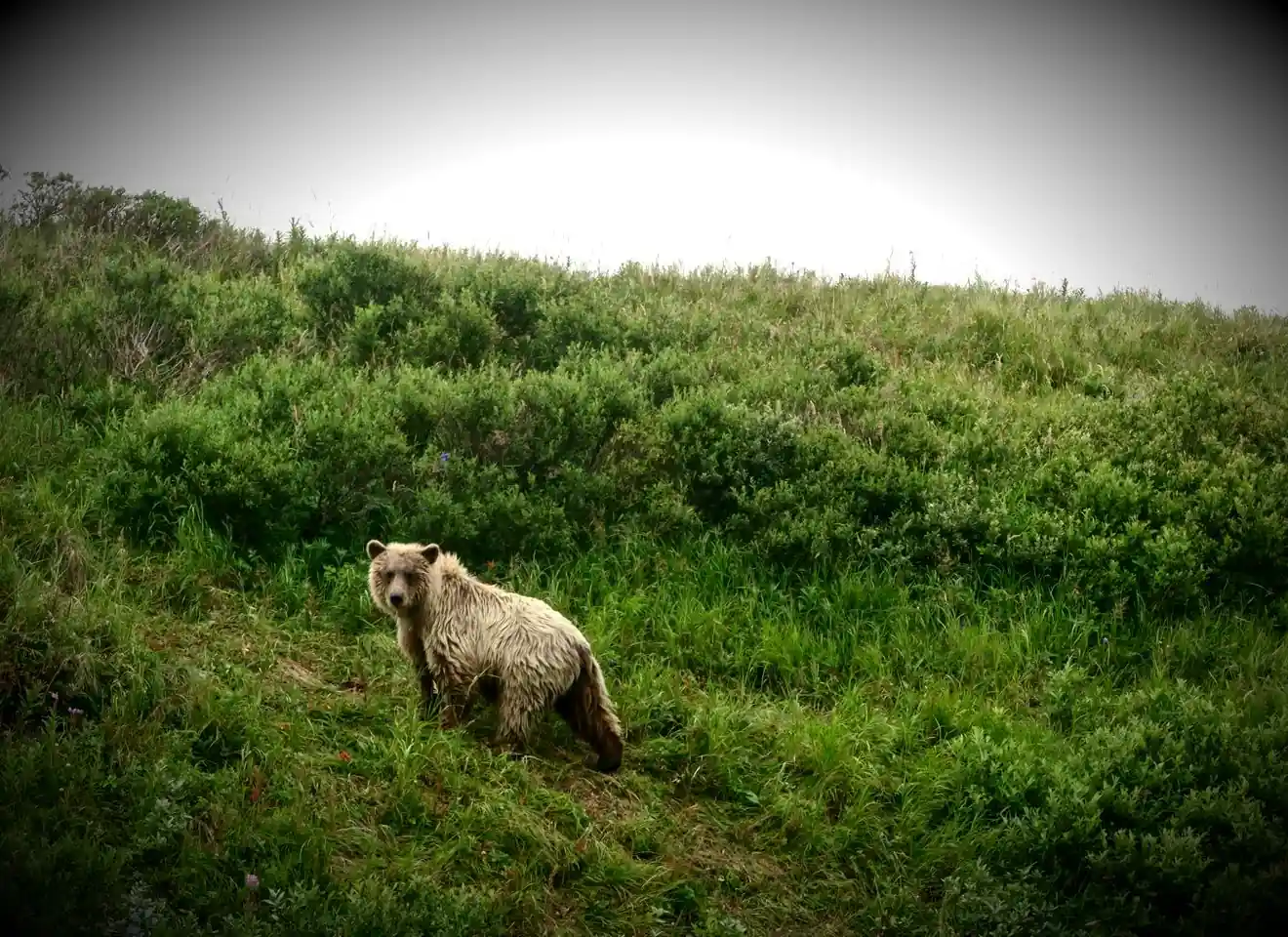
You're sitting on a billion-year-old glacial deposit, surrounded by tundra rolling to the horizon, eating the best sandwich you've ever had — because you earned it. Often there's a brown bear working the far bank while you eat.
This is the Togiak National Wildlife Refuge. Wolves, bears, moose, eagles, caribou — this is their address. You're the visitor. Act accordingly, and it reshapes how you think about wild places.
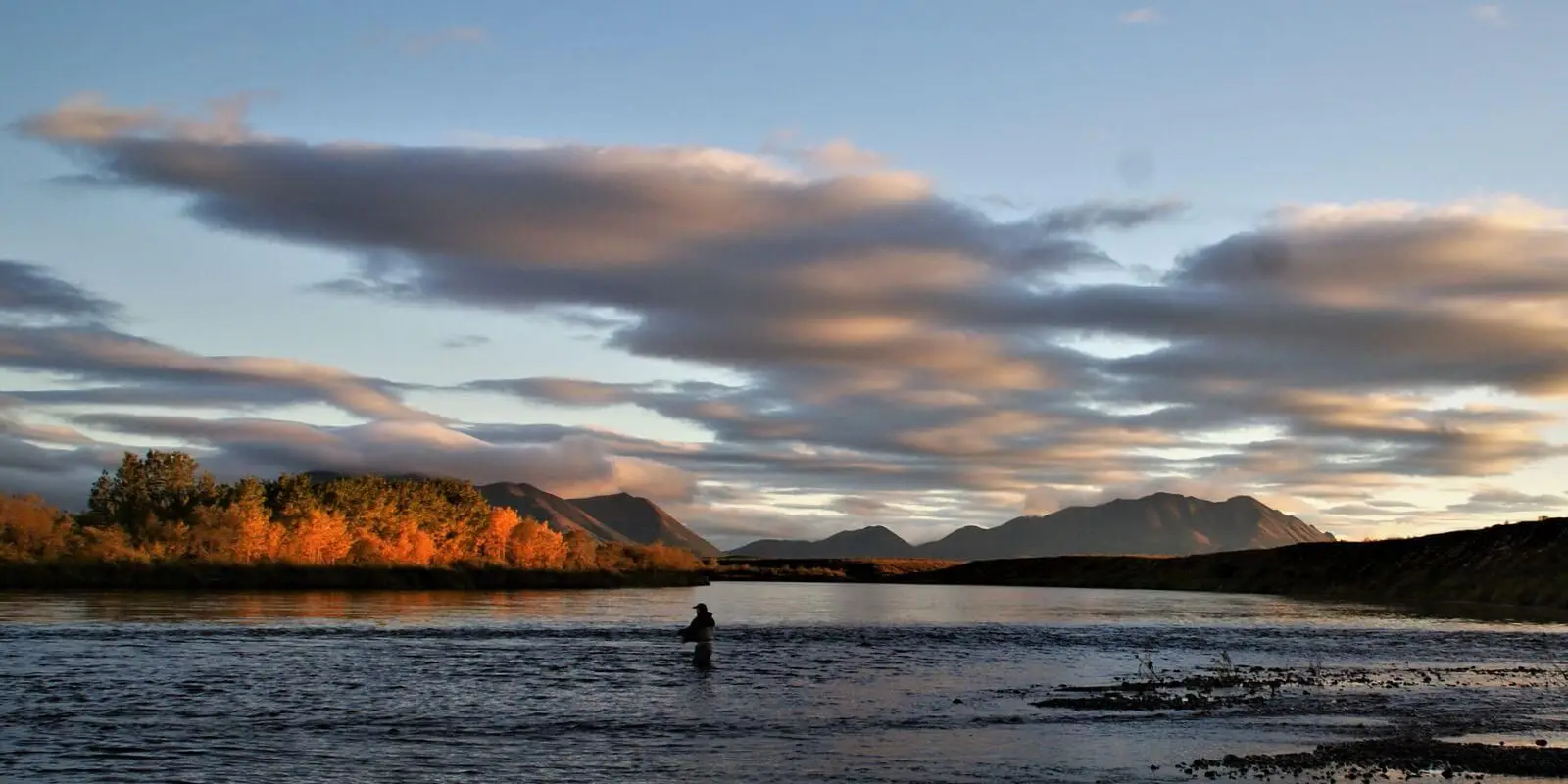
It just gets lower and softer and orange, holding on for hours. The best photographs of the entire trip often happen right here — at camp, after dinner, when nobody was planning to take pictures.
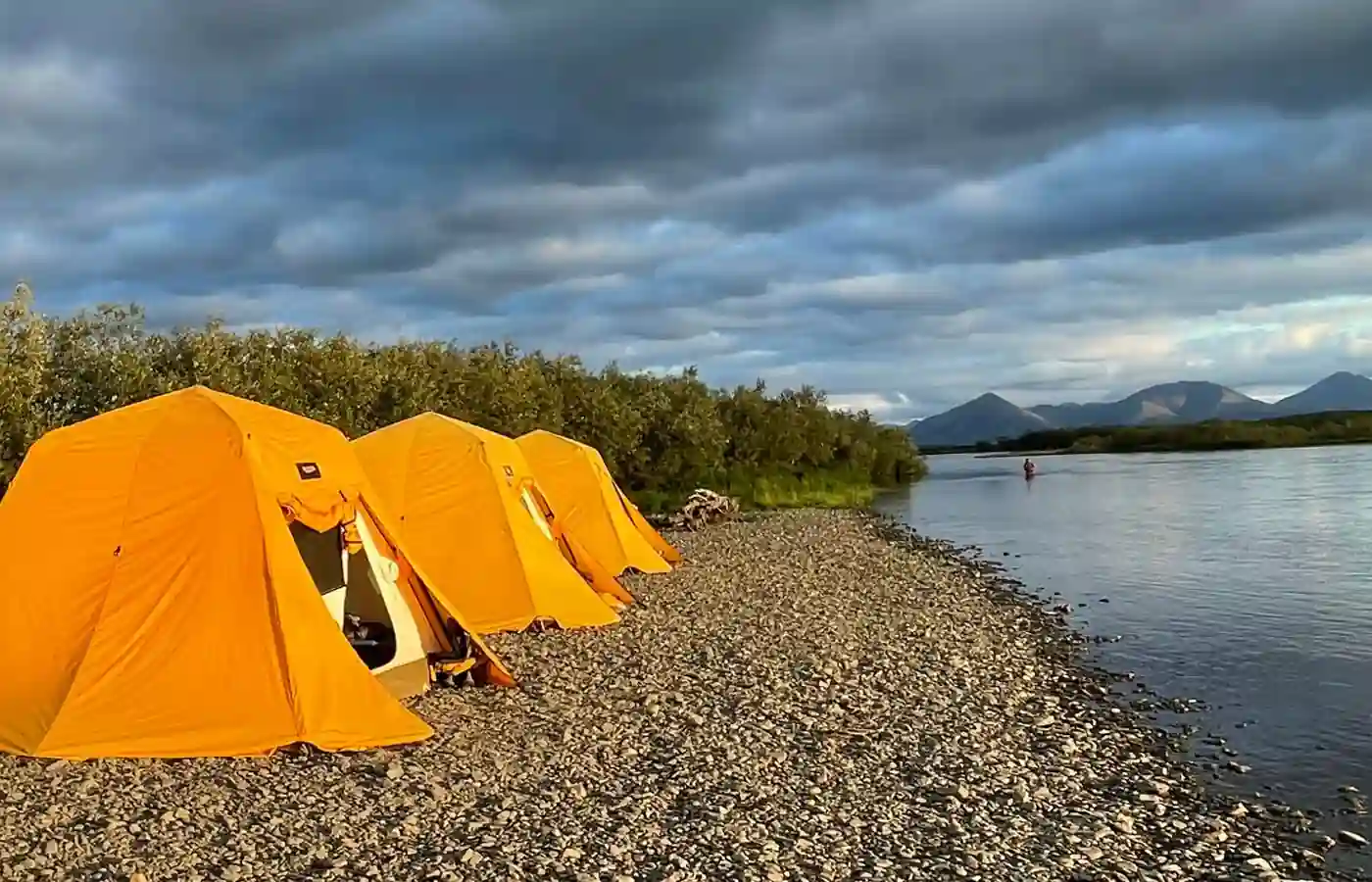
Dinner on a wilderness float is not roughing it. That surprises people. Hot, hearty food, the kind that makes sense after a full day on the water. There's something about the combination of cold air, tired legs, and a meal cooked over a camp stove that makes everything taste exceptional.
"Someone will usually rig a rod again — there's always that one run just upstream from camp that nobody could quite get to during the day. Sometimes it pays off."
"By day three or four, you start to understand the river. You know what the water temperature means for where the fish are holding. You know which kind of clouds mean the rainbows may take on the surface. You know the rhythm."Paul Hansen · Alaska Rainbow Adventures
A lodge anchors you to a single piece of river, fished-out by rotating groups of anglers. A float trip carries you through an entire watershed. Every bend is new. Every day is different. Every mile reveals something the last one didn't.
Last season, a guest hooked a rainbow in a side channel that hadn't seen a fly since the previous fall. He looked at me and said: "This shouldn't be legal." That's the difference. You're not fishing leftovers. You're discovering something new every single morning.
Your "crowd" is your group, your guides, a moose if you're lucky, and a bear if you're paying attention. I've had entire weeks where the only other tracks we saw were animal tracks.
I hold USFWS and NPS permits for each of these systems. We're not squeezing in alongside other operations — we have access most outfitters never will.
Prime mouse fishing water. Big leopard rainbows, prolific Dollies, and July conditions that produce some of the most visual dry-fly takes in Alaska.
Explore the Kanektok →Silver coho, Dolly Varden, and a late-season run that rewards patience. The river where the most photographs happen.
Explore the Goodnews →Maximum four guests. For people who've fished other Alaska rivers and want something still further from the edge of the world. The intimate option.
Explore the Arolik →Big water. Big fish. The Togiak National Wildlife Refuge — one of the largest protected wilderness areas in the United States.
Explore the Togiak →The "Branch River." Five Pacific salmon species, wild rainbows, and one of the most fishable rivers in all of Alaska.
Explore the Alagnak →Katmai country. Sockeye-season rainbows stacked behind salmon redds, brown bears working the banks, and scenery that doesn't feel real.
Explore Moraine Creek →A few years ago, on the first night of a float, a guest pulled me aside while we were setting up camp. He looked around at the tents, the kitchen, the river sliding past in the evening light, and said: "I didn't know what to expect out here — but I didn't expect this."
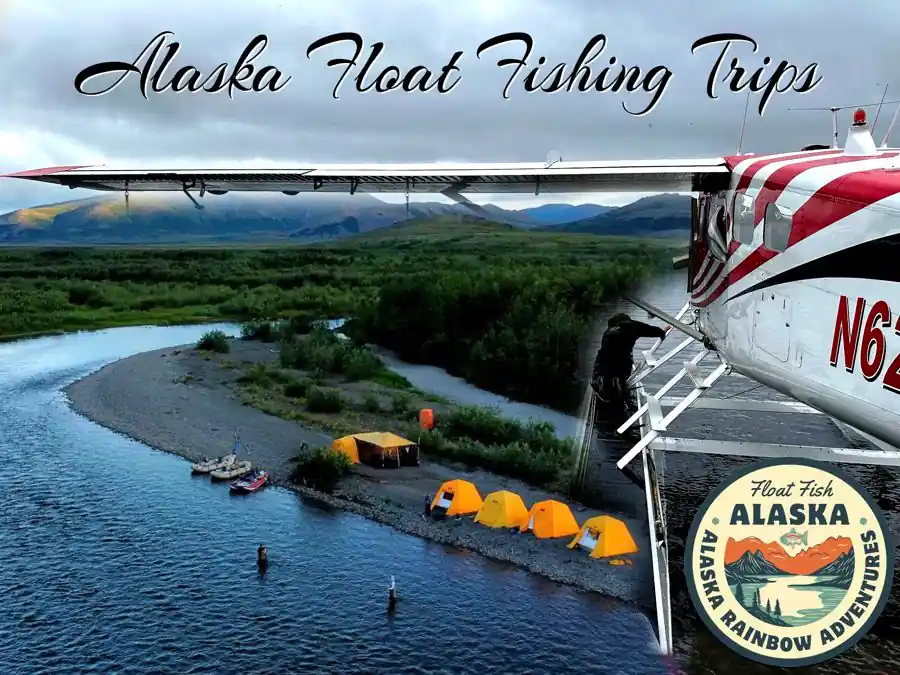
He meant the organization. The calm. The feeling that everything was handled. People hear "wilderness trip" and imagine roughing it. People hear "high-end" and imagine a lodge. A premium float trip is neither. It's something else entirely — something most anglers don't know exists until they experience it.
I've had chefs from the Lower 48 look at our river kitchen and say, "You're doing that out here?" Yes. Because comfort matters more when you're 80 miles from the nearest building, not less. The real premium — the part people feel but can't always name — is judgment. Thirty-plus years of it, earned the long way.
I've been guiding anglers in Southwest Alaska since 1993. There is one thing I hear more than anything else when someone steps off the floatplane:
"I should have done this twenty years ago."
They're not wrong. But at least they're here now. I've also watched men step off the plane with tears in their eyes because they finally made it — and they know they waited too long.
Our camp systems are engineered to protect the capacity you arrive with — premium sleep systems so you wake up rested, real food so you have fuel for long days, weatherproof tents so you're not burning energy just trying to stay warm. But those systems protect what you bring. They don't restore what time has taken.
If you're in your 50s or 60s and you've been thinking about Alaska — you're not too young. You're not too old. You're probably exactly right. The distance between thinking and doing is one phone call.
These trips tend to work best for people who enjoy being outside all day, like learning a river rather than hopping between spots, want to fish water most anglers never reach, and appreciate good food and a comfortable camp even far from roads.
You don't need to be an expert fly angler. Some guests arrive with decades of trout fishing behind them. Others simply want to experience what a real Alaska river feels like for a week. We've put first-time fly fishers in front of fish that experienced anglers have traveled years to reach. If you're willing to learn, we'll teach.
You'll be on your feet on uneven gravel, wading current, covering miles. Most of our guests are in their 50s and 60s and do just fine. You need to be comfortable in your body outdoors — not an athlete, just present and willing.
Each season, we run a limited number of groups across six rivers. Dates fill from the inside out — the most-requested windows go first, and some rivers book a year or more out. If you're considering a trip, earlier is always better than later.
When you reach out, you're talking to me directly. No booking portal, no coordinator, no calendar form. Tell me what you're after — dates, river, group size, experience level — and I'll tell you what's open and what I'd recommend. That's how this has worked since 1993.
Start Here
No corporate booking system. No reservation portal. You deal with me — the person who has been running these rivers since 1993, who will be on the oars when you're out there. Tell me what week you're considering. I'll help you find the right fit.
Spots are genuinely limited — this is permitted wilderness with strict group size caps. The July Kanektok dates move first. The Arolik fills by request only. If you've been thinking about this, now is the right time to start the conversation.