Why Alaska
There is no shortage of good fishing in North America. There is a very short list of places where the fishing is genuinely in a different category — where the species, the habitat, the access difficulty, and the sheer volume of fish combine into something that serious anglers pursue for years before they finally go.
Alaska Rainbow Adventures specializes in guided wilderness float fishing trips on remote rivers in Southwest Alaska. Each trip is a multi-day expedition accessed by floatplane and limited to small groups to preserve the character of the rivers and the quality of the fishing.
Our trips target wild Rainbow Trout, all five Pacific salmon species, Arctic Char, Dolly Varden, and Arctic Grayling across six river systems in the Togiak National Wildlife Refuge and Katmai National Preserve. These are true wilderness float trips — no road access, no lodges nearby, and fishing that reflects the strength of an intact ecosystem.
The rivers we operate on in Southwest Alaska share a specific set of characteristics that produce exceptional fishing. No road access. Protected federal wilderness status — USFWS refuge or National Park preserve. Annual Pacific salmon runs that deliver millions of calories directly into the food chain. Cold, clear water with invertebrate populations that support large, fast-growing resident fish. And enough water between put-in and take-out that a float covers genuinely new water every day.
That last point matters more than most people realize before their first float. A lodge day-trips clients to the same runs repeatedly. The fish in those runs see flies and beads daily. A float doesn’t work that way. The pool you fish in the morning was untouched the evening before. The fish are not educated. The river keeps moving, and so does the camp.
What You Actually Get on a Southwest Alaska Float
- No road access to any river we operate on. Every trip begins with a floatplane flight. That’s not marketing — it’s the reason these fisheries are what they are.
- All five Pacific salmon in the same river system. Chinook, Coho, Sockeye, Pink, and Chum, in varying combinations depending on river and timing.
- Wild, un-stocked trout populations. Every rainbow you catch in these rivers grew there. No hatchery. No supplemental stocking. A 22-inch fish earned every inch.
- Protected wilderness. USFWS Togiak National Wildlife Refuge and NPS Katmai National Preserve. Regulated access, strictly managed, genuinely remote.
- Bears, wolves, moose, caribou, and eagles in the drainage — not as an afterthought, but as routine.
- The float itself. Multi-day river travel in wilderness. You wake up on the river. You fish the mornings and evenings and everything between.
The Fish
Species availability varies by river and season. The list below covers everything we encounter across our six river systems — not every fish is present on every river, and timing determines what is in peak condition when you arrive.
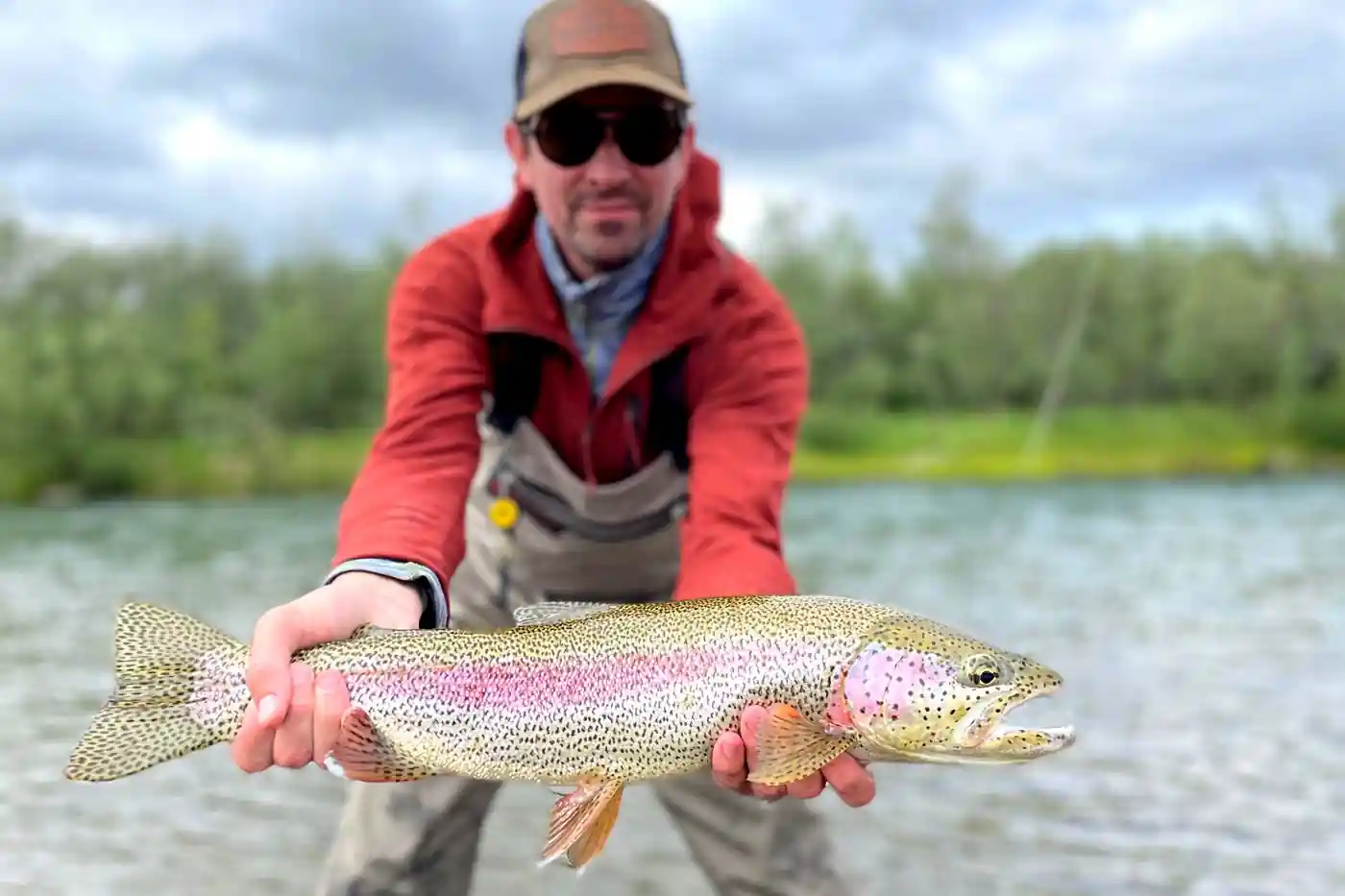
The wild Rainbow Trout are the signature fish of our operation. Not stocked, not managed — fish that have lived their entire lives in cold, clean wilderness rivers. They grow large because the food supply is exceptional: in July on the Kanektok, salmon are arriving, eggs are in the water, and surface prey including mice are abundant along the banks. A big Kanektok rainbow exploding on a mouse pattern at dawn is one of the genuinely memorable experiences in Alaska fly fishing.
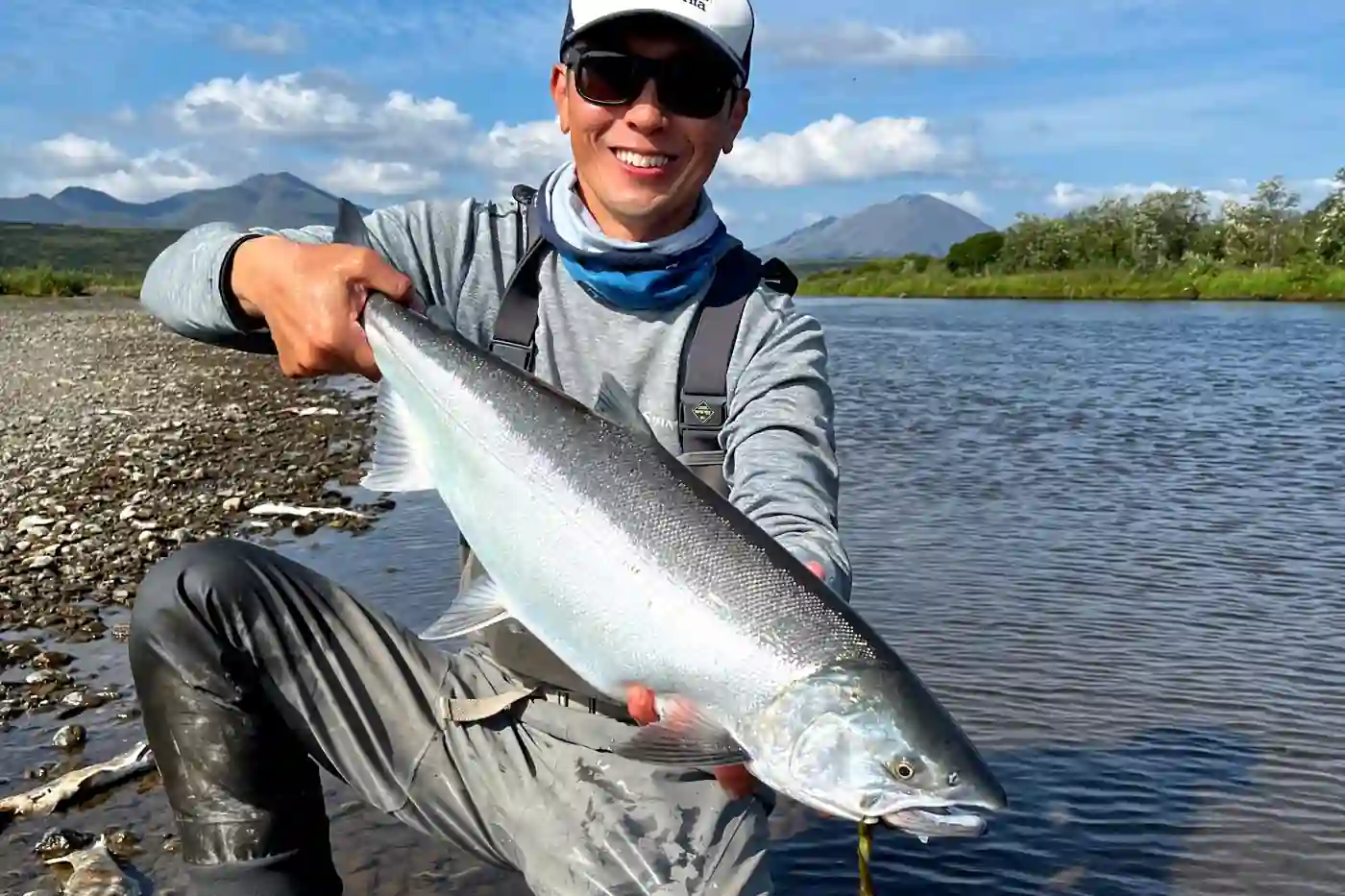
Chinook (King) Salmon are the largest Pacific salmon and the first to enter the rivers in June. Coho (Silver) Salmon close the season in August and September — aggressive, acrobatic, and the most fly-responsive of the five species. Sockeye arrive in massive numbers in July, sight-fishable in clear water. Chum are underrated fighters. Pink Salmon add fast-paced light-tackle action throughout the system during even-numbered years.
The Rivers
Every river we operate on requires a floatplane to reach. No road access means significantly less pressure, healthier populations, and fishing that genuinely reflects the strength of a wild ecosystem.

90 miles through the Togiak NWR. World-class wild Rainbow Trout. All five salmon species. Five scheduled trips in July — prime mouse fishing season. Our flagship river. Full details →
Outstanding late-season Coho Salmon in August and September. Strong Rainbow Trout population throughout. One of the premier Coho rivers in Southwest Alaska. Full details →
Available by request. An intimate wilderness float with strong trout and salmon populations in a less-traveled corridor of the refuge. Fly-in from Bethel. Full details →
A major Southwest Alaska drainage with all five salmon species and strong Rainbow Trout throughout the season. Fly-in from Dillingham. Full details →
A legendary Bristol Bay drainage with all five salmon species and exceptional Rainbow Trout. One of the most productive wild rivers in Alaska. Fly-in from King Salmon. Full details →
Trophy Rainbow Trout on beads in mid-August. Massive Sockeye runs. Brown bears fishing the same water. Max 6 guests. By request only. Full details →
Season & Timing
Alaska fishing is not uniformly good from May through September. Each species peaks on a specific river in a specific window — often only a few weeks wide. Trip timing is the most important planning decision you will make.
Chinook (King) Salmon are moving. June is the only window with a legitimate shot at Kings on most rivers. Cold, clear water is excellent for sight-fishing Rainbow Trout and Grayling. Sockeyes starting to build. King tag required separately.
The busiest month for a reason. Sockeyes in peak run. Rainbow Trout aggressive and well-fed. Kanektok mouse fishing at absolute peak. Five scheduled Kanektok trips run specifically for this window. Most in-demand — book early.
Moraine Creek: mid-August is the best window for trophy Rainbows on beads. Max 6 guests, fills years in advance. Goodnews River: Coho Salmon arriving — bright, chrome-sided silvers with no pressure yet.
Goodnews River: Coho in full run — aggressive fish that will eat a fly or spinner hard. The July crowds are gone. Weather gets less predictable; build buffer time into travel plans on both ends of the float.
If you can only go once and want the single most reliable window across the most species — book July on the Kanektok. Sockeyes running. Rainbows active. Mouse fishing at peak. Five salmon species in the system. Long days. That’s the window serious anglers keep coming back to.
Best Time to Fish Alaska
There is no single best month to fish Alaska. There is a best month for each species on each river. Pick your target species first, then book the window that matches it.
- Chinook (King)June – Early July — Kanektok, Alagnak. King tag required separately. Only window for this species.
- SockeyeEarly – Mid July — All rivers. Massive runs; excellent sight-fishing in clear water.
- Rainbow — MouseJuly — Kanektok River. 5 scheduled trips; peak topwater window.
- Rainbow — BeadsMid-August — Moraine Creek. Max 6 guests; NPS permit; book by request.
- Coho (Silver)August – September — Goodnews River. Best late-season Coho fishery in Southwest Alaska.
- Char & GraylingJune – September — All rivers. Available throughout season; peak spawning color in fall.
Run timing shifts year to year based on water temperature, snowmelt, and ocean conditions. Paul tracks run data and can give you a current read before your trip — if you want the unvarnished current picture on a specific river and month.
The Float Trip
A float trip is not a lodge trip with some river access. You are on the river for the full duration — traveling, camping, and fishing continuously from put-in to take-out.
Float vs. Lodge — The Actual Difference
A lodge puts you in a fixed location and day-trips you to fishing spots on rotating circuits. The fish in those spots see flies and beads daily. Over the course of a week, you fish some of the same water multiple times.
A float starts at the headwaters and ends at the take-out. You never fish the same water twice. Every run in the morning is new; every evening pool is water that hasn’t seen a fly since the last group floated through — which may have been weeks earlier, or never. The fish are not conditioned.
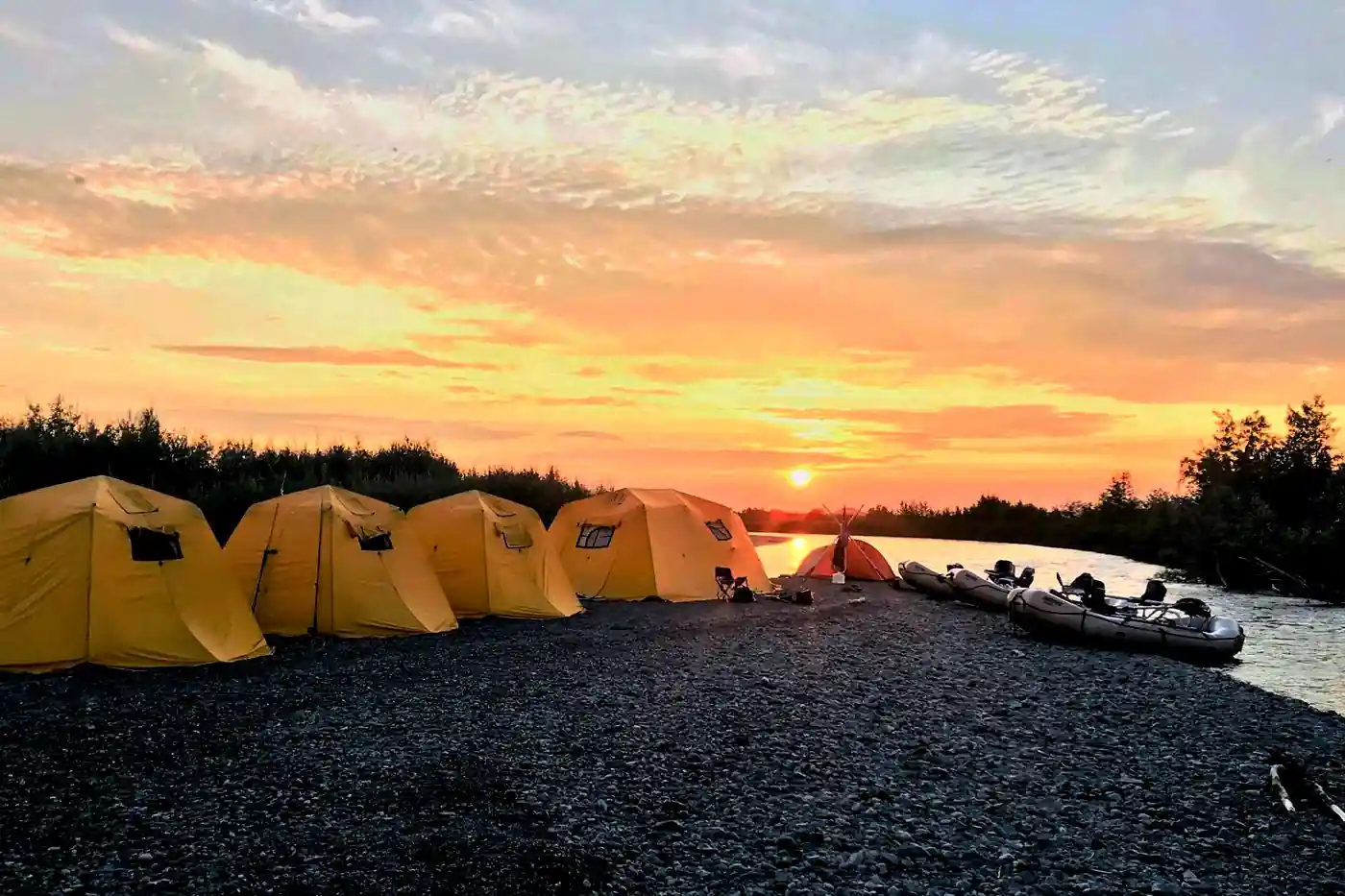
- Camp moves every 1–2 days as you progress downstream. Kitchen, sleeping tent, and dining area float with you.
- 2:1 guest-to-guide ratio in the rafts. Personal attention throughout, not crowd management.
- Both fly and conventional tackle equally at home. No elitism about method — what works, works.
- Fisherman’s Deluxe, Standard, and Intimate Rivers service levels available. See all programs.
- Fishing gear is available — rods, reels, a generous selection of flies, and limited terminal tackle. Please note any specific needs when booking, or feel free to bring your own.
- Garmin inReach satellite communication on every trip. Emergency capability throughout.
Prepare for Your Trip
A float trip in a remote wilderness refuge requires some preparation that a standard fishing trip does not.
- License Buy a 14-day Alaska license to cover travel days. King Salmon tag required separately if targeting Chinook.
- Insurance Required for all trips. Weather cancellations and floatplane delays are realities of remote wilderness travel.
- Packing Layered waterproof clothing, waders and boots, quality rain gear, polarized glasses. We provide all fishing equipment on the river.
- Getting There Fly Anchorage to Bethel (Togiak NWR rivers) or King Salmon (Katmai rivers). Allow extra time on both ends for weather.
- Methods Fly and spin both fully supported. Our guides match technique to species and conditions.
- Tackle We stock everything that works on our specific rivers. Nothing to purchase in advance that we won’t have.
Ready to Start Planning?
Tell Paul which species you want to target and when you can go — he’ll match you to the right river and window.